Dr. Kevin Byrd on identifying the minimal signature needed for clinical trials
Why a head and neck cancer program is working to collapse multi-omic panels into a small, validated protein signature that clinical-trial teams can adopt.
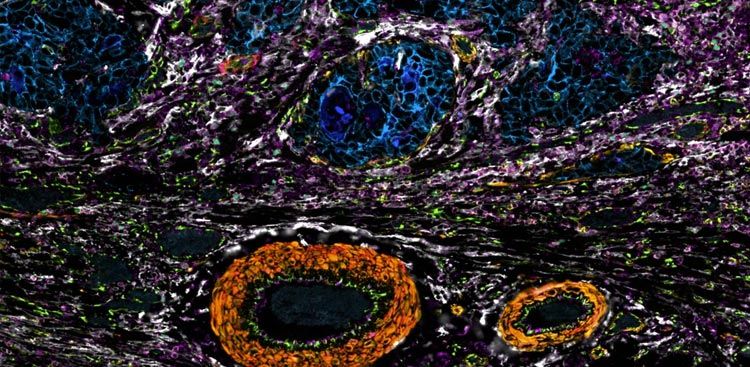
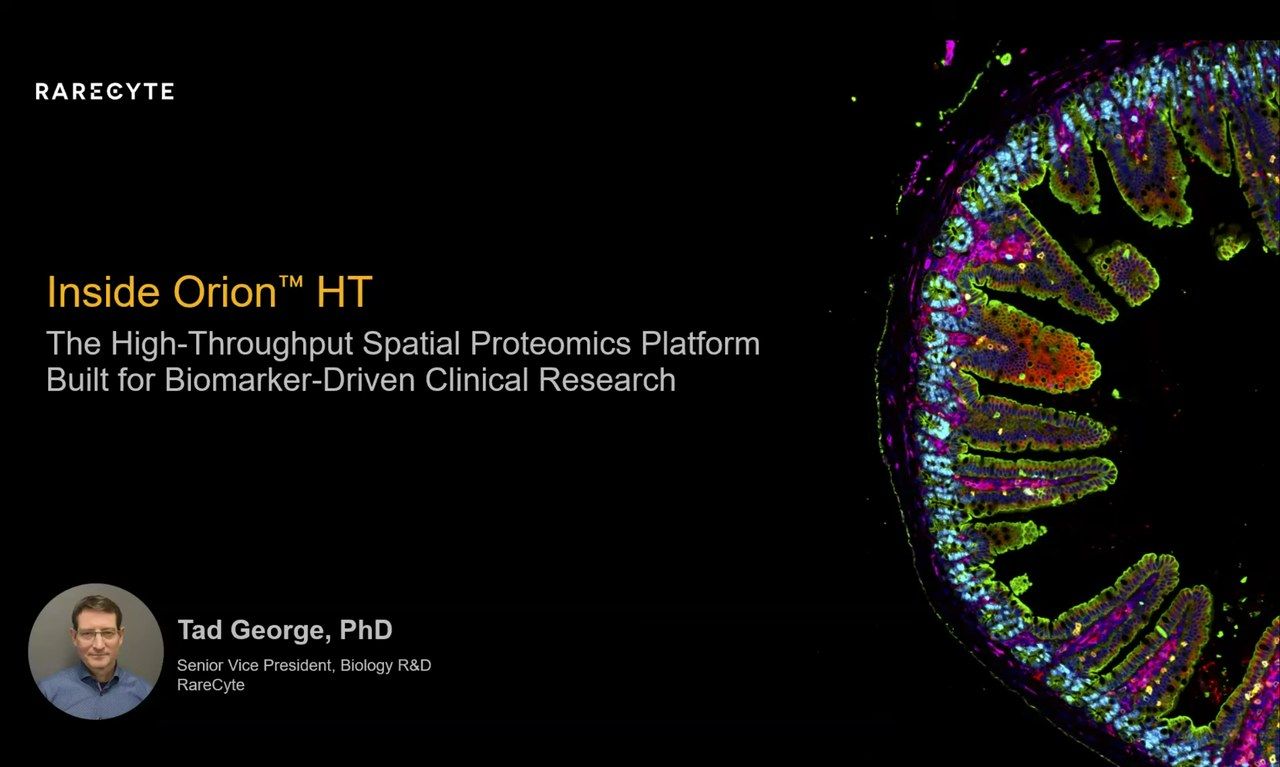
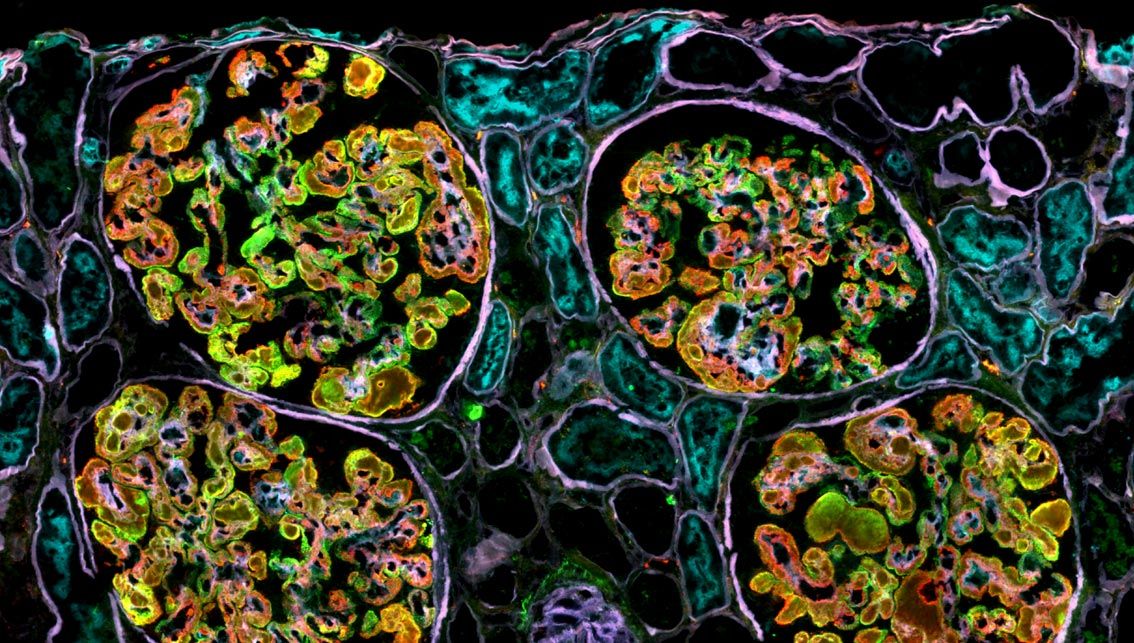
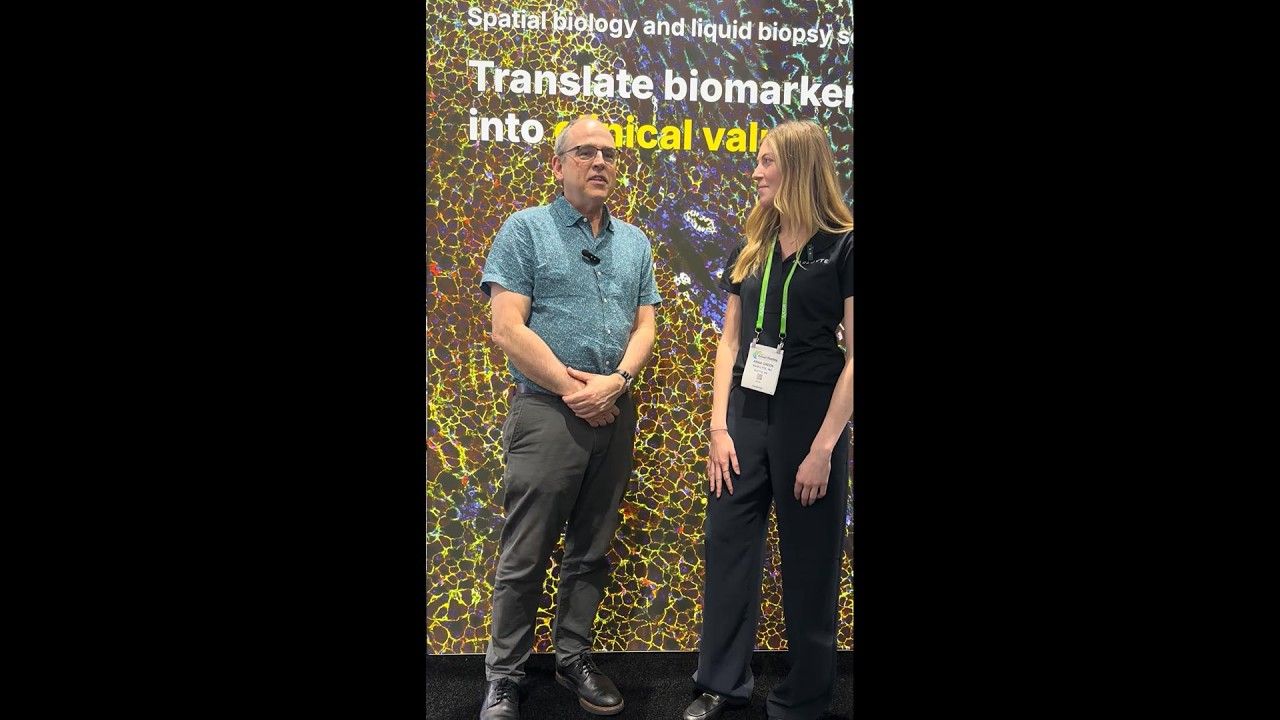
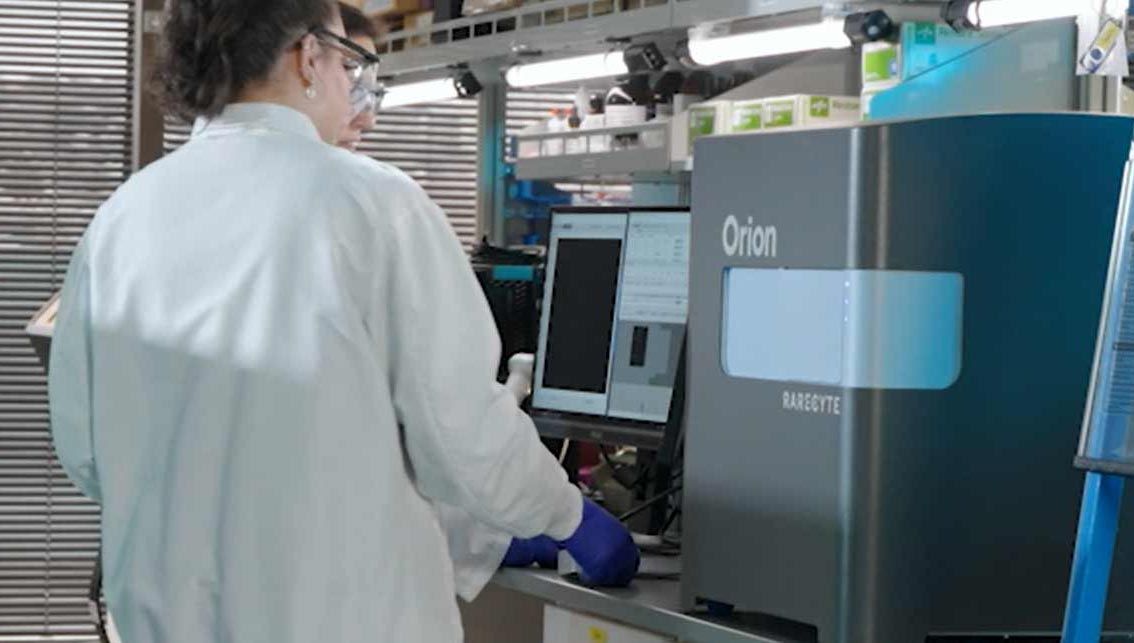
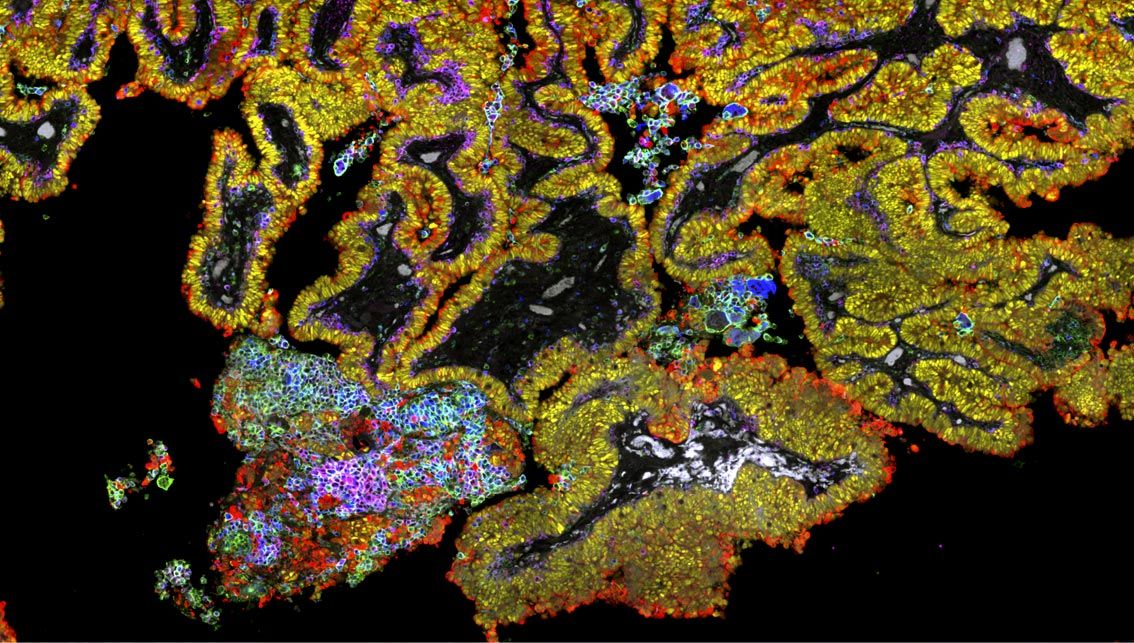
At the RareCyte booth at AACR, Dr. Kevin Byrd lays out how his group is working to distill spatial biology down to the minimal protein signature a clinical-trials team could actually adopt. The head and neck cancer program he describes is a multi-site collaboration spanning Virginia Commonwealth University, Penn, UNC, Miami, and Toronto; it links RNA and protein and ties both back to routine H&E, collapsing panels so that nine to thirteen RNA targets can be represented by a single protein and a small, validated protein signature can stand as an adjunct diagnostic or prognostic test. For Byrd, what makes those signatures fast enough to matter in the clinic is the pairing of Orion™’s single-round, non-cyclic workflow, which images a pre-vetted pool of roughly 17 markers in about an hour, with the AI analysis tools at his startup, Stratica.
In this video:
- Byrd’s goal is “virtual tissue models” of head and neck cancer, building each niche in iterative cycles from healthy and premalignant tissue to tumors.
- The sample set spans subsites (tonsil, cheek, tongue) and subtypes: Fanconi anemia-associated cancer, adolescents aged 10 to 19, and a risk-factor-negative cohort.
- The “minimal signature” thesis: collapse RNA and protein so a few proteins represent 9 to 13 RNA targets, an adjunct diagnostic/prognostic test for clinical trials.
- Why Orion: its non-cyclical, single-round workflow stains and images a pre-vetted pool of about 17 markers in roughly an hour, across cancers and disease transition points.
- The analysis half of the pairing: AI tools at Byrd’s startup, Stratica, apply marker signatures to disease paradigms, matching Orion’s data-generation speed.
- Byrd’s advice for newcomers: come with a specific question, and bring clinicians, pathologists, immunologists, and virologists to the same tissue that multiplex resolves.
Full transcript
Interviewer (RareCyte): Hi. We’re live at AACR here at the RareCyte booth, and I’m here with Kevin Byrd from Virginia Commonwealth University. Kevin, could you tell us a little bit about the research you’re doing?
Dr. Kevin Byrd: Yeah, that sounds great. At Virginia Commonwealth University, we’re really excited to be able to start moving toward virtual tissue models. So for us, this is actually taking many, many types of the same, let’s say, one niche, and then building that niche in iterative cycles through the natural history of the disease. Right now we’re focusing on head and neck cancer, because we actually have sites from the tonsils, from the cheeks, from the tongue, from healthy tissue, premalignant cases (some of which have progressed and some of which have not progressed), and then a variety of types of head and neck cancer. People actually miss that there are subtypes — there’s Fanconi anemia-associated head and neck cancer, and actually younger kids between 10 and 19, beyond the classic cases people know about, and even a less appreciated risk-factor-negative cohort. So cross-collaborations at Penn, VCU, UNC, down in Miami, up in Toronto — people are really joining together to start thinking about how we scalably deliver spatial omics to find biomarkers that can be useful in clinics.
Interviewer (RareCyte): That’s great. How are you using spatial proteomics in particular?
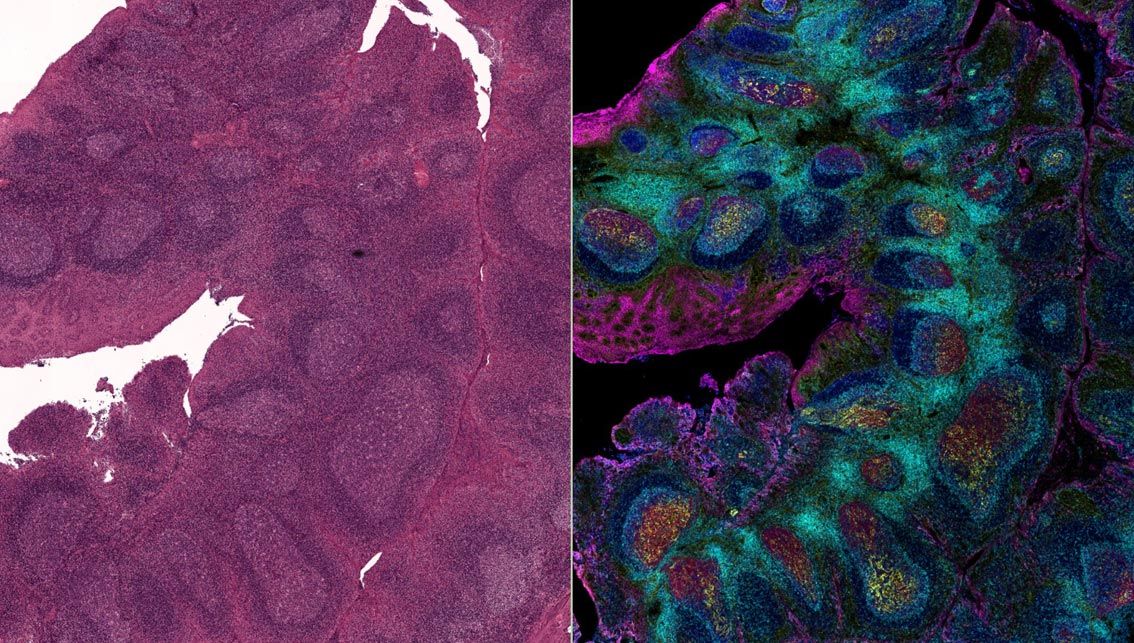
Dr. Kevin Byrd: Yeah, so we link a lot of RNA and protein together, and then link that back to H&E. The goal is not to replace H&E but to enhance it. Protein has been an essential technology for us over the last couple of years. And what we really want is to get down to the minimal signatures required, so we can partner with clinical trials teams, even thinking about the clinical adoption of this technology. So for us, sometimes nine or 10 or 13 different RNA molecules mean one protein. And so we start to collapse those signatures of one technology into the next, and the next, back to H&E. Eventually we think we can use that protein signature as an adjunct diagnostic or prognostic technology for the clinic.
Interviewer (RareCyte): And what made Orion the right fit for your research, and what makes it different than other spatial technologies you’ve used?
Dr. Kevin Byrd: Yeah, so what we’re really excited about is the non-cyclical nature — the idea that within about an hour we could take a pool of about 17 markers, markers we’ve already vetted, markers that we actually think are going to be useful in a pool of cancers or in those healthy-to-disease transition points. And then from that, we have AI tools on our side, at my startup company Stratica, that could leverage those signatures across all those different paradigms to make those signatures, I think, discernible and useful very quickly. And so if we have quick AI technologies for analysis, and RareCyte has quick technologies to generate that data, that marriage is very impactful for clinics.
Interviewer (RareCyte): And just one bonus question, for researchers who are just starting out using spatial proteomics tools: do you have any advice or tips you would give them when it comes to running spatial?
Dr. Kevin Byrd: One of the things that we think is really, really important is that you come in with a question in mind. Not everybody always has a question that they’re really eager to answer with more plex, but we find that when people sit down and start having conversations about the diverse phenotypes — especially when you bring in clinicians, pathologists, immunologists, even virologists, other people who I think contribute to the idea of host, microbiome, and disease pathophysiology — they all have a slightly different interest. And so this is where multiplex can actually solve a lot of these questions, because people start to see the disease from their own purview, and then we find that the multiplex actually helps answer new questions in synergy. So I wouldn’t say just by yourself have new questions, but I think that multidisciplinarity that we’re all excited about is really important for us to think about the next steps together.
Interviewer (RareCyte): Thank you so much.
Dr. Kevin Byrd: Thank you so much.
Transcript reproduced from the recorded interview and lightly edited from an automated caption source for speaker labels, obvious transcription artifacts, and the accuracy of proper names; the speakers’ words are otherwise as delivered. Pre-roll setup chatter was omitted, product names were normalized to their correct forms (for example, RareCyte and Orion™), the event was identified as AACR, and a caption rendering of the word “adjunct” was corrected. Statements of affiliation, quantities, and study details are reproduced as spoken by the participants and may differ from formally published values.