Bridging the Discovery-to-Translational Gap in Spatial Biology
Why an academic immune-monitoring lab reached for Orion’s single-round, 20-plex imaging to carry spatial findings from discovery into validation.
RareCyte’s Tad George sits down with Zhihong “Z” Chen — an immunologist at the Icahn School of Medicine at Mount Sinai and CTO of the academic research organization (ARO) OCCAM Immune — to work through a problem spatial biology keeps hitting: how do you carry a promising research finding across the gap to a clinically meaningful biomarker? Chen explains why his group runs Orion’s single-round, high-plex imaging as the validation complement to their discovery-stage spatial transcriptomics, and George maps where single-round throughput and reagent reproducibility fit on the path from research to clinic. Along the way, George notes that in clinical studies roughly 95% of the question comes down to the density of cell types in and around the tumor.
In this video:
- George names the discovery-to-translational gap the talk is built around: before Orion, no practical bridge from research insight to a clinically valued biomarker.
- Chen splits the work: spatial transcriptomics (Visium HD, Xenium) for discovery, and single-round Orion multiplex immunofluorescence for validation and translation.
- Single-round, explained: the panel is stained once and imaged in one pass across Orion’s 20 channels, not built up through repeated stain-and-strip cycles.
- As an immunologist, Chen embraced Orion’s spectral unmixing because it echoes the spectral logic his lab already uses in flow cytometry.
- OCCAM has built 20+ Orion panels across colorectal, myeloma, lung and ovarian tumors, and nearly every project needs custom markers beyond the catalog.
- George ties reproducibility to the reagents: master-mix staining, validated direct conjugates, and a five-year shelf life, all pointing toward a CLIA/LDT path.
Full transcript
Tad George (RareCyte): Yes. Thank you everybody for joining the live session on the topic here, which is really it’s spatial biology focus, but it’s kind of an interesting time in science that there’s quite a bit of discovery that’s going on in spatial, but really trying to how can we bridge that discovery, translational gap in spatial biology? And we have with us today Zhihong Chen, who’s the chief technical Officer of OCCAM Immune, who’s kind of doing this work. Z why don’t you go ahead and introduce yourself briefly.
Zhihong “Z” Chen (OCCAM Immune): Sure, sure. My name is Zihong, I just go by Z, which is the letter happened to be the last in the alphabet. So I’m an assistant professor at the Department of Immunology and the immunotherapy here at the Icahn School of Medicine in Mount Sinai Hospital. I’m also serve as CTO of OCCAM Immune. So my research interest has always been focusing on neuro inflammation, particularly those relate to the innate immunity, how they interact or react and shape the disease and microenvironment in central nervous system. So during this process, I also developed a strong passion for technology development and their implementation. So looking back, I’m among the first to use this 3D electromicroscopy to look at the interactions between microglia and neurons and also among first use multiphoton confocal microscopy to peak directly into the brain of living mouse to observe microglia and microphages in brain tumors. So all those technologies are really transformative from my studies. So here today, I’m also very excited about this Orion, another ground shattering technology. I would say to share with everybody our experience in adapting this technology and hopefully we can democratize to everybody who’s interested in using it.
Tad George (RareCyte): Yeah, thanks, Z. And also in the spirit of interactivity, we definitely feel free, anyone that’s on there participate, interrupt with any questions that you have. There is sort of a Q and A function on the zoom bar. Just use that to ask questions. What I’ll do, I’ll give a few slides on the Orion technology and how we feel like it’s transformational for translational spatial. I can’t believe I said that, but feel free to interrupt us with questions. Z will interrupt me with questions when Z’s talking about what he’s doing with our technology at OCCAM Immune. I’ll interrupt him, but just feel free to participate.
Yeah. So let me go ahead and give you kind of a general introduction to what we think of as translational spatial at RareCyte and a little bit about what was behind the Orion system. So the term spatial biology is used a lot, but I think it means different things to different people. But I think the highest level is spatial biology is essentially evaluating tissues and in particular microenvironments within tissues, which means you’re using imaging technology, but you’re trying to determine what’s going on and how that impacts human health. So it spans very research oriented activities in the last 10 years. There’s an explosion, whole transcriptome level, spatial information that’s generated lots of insights in the research side, but it also includes clinically impactful single protein IHC tests and even really H&E. So although I think most pathologists doing that type of work don’t necessarily consider themselves doing spatial biology, but they really are.
And there’s kind of a moment in time now where this is exciting, but it’s also, I would say prior to the Orion introduction, there’s been no practical way to translate this tremendous amount of research insights into spatial biomarkers with actual clinical value. There’s this gulf. And I won’t get into why we developed the system the way we did, but suffice it to say that this informed the Orion, which you can think of as a very high plex, single round approach to spatial. And if we look at the translational continuum, it kind of goes from research to clinical. In the research side, really you’re looking to figure out potentially valuable biomarkers in pilot studies that ideally you would want to validate as part of a larger scale clinical study. So you’re looking for new biomarkers in this space. On the more clinical side, you’re simply trying to reveal biomarkers with actual value, but they’re typically done in large scale studies tied to clinical outcomes.
So there’s different sort of ways that you or technologies that you would use in these different settings. And a lot of them are kind of described here. So in biomarker space, on the protein side, you’re typically downstream of high plex, transcriptomics, and you’re typically looking for, I don’t know, 15 to 50 biomarkers to try to see which ones are useful. The study size typically relatively small. Data quality is important of course for everybody, but it becomes more and more important as you go towards the clinical. We’ll talk about that in a second. And of course there’s a run cost sensitivity. Certainly if you have the technology at a CRO or a core facility, you need to make sure that people can afford to run the experiments. So in the research side, there’s lots of plex, there’s lots of reagents per sample. In the clinical side, the throughput goes way out because typically you’re building studies here tied to clinical outcomes and you’re looking for Kaplan-Meier curve level statistics. So I would say normally people are doing at least a hundred samples, right Z?
Zhihong “Z” Chen (OCCAM Immune): Yes.
Tad George (RareCyte): In order to do that. So in that case, you also need affordable reagents because not because the plex is high, the plex typically goes down. Typically you already kind of know what cell types you’re looking for, say immune response to therapy. You’re not looking for novel biomarkers, you’re looking for response to therapy. Or maybe if you have retrospective cohorts, you might want to design a targeted study to sort of address what biomarkers might have positive impacts for outcomes. So those are large studies and need lots of reagents. The other thing that really happens that I alluded to before, once you get into this sort of clinical space, you really want reliable results, right? So you need things like accuracy, reproducibility, single round tissue integrity, whole slide analysis, validated reagents, single lot studies, all these kind of things that typically people are talking about when they’re talking about IHC, for example.
But of course IHC is limited to one marker typically per section, and that’s not going to be quite sufficient, right to resolve microenvironments where there’s different cell types in states, et cetera. So that clinical workflow is really what drove Orion because we needed some single round throughput in data quality at a plex, really that really wasn’t available in the marketplace. We do address the high plex research market, obviously cycle with the Orion. It’s a 20 channel system, so if you need to do more than 20, you can certainly cycle and address that kind of high plex activities. So Orion basically covers that sort of translational space on a single platform. 20 channel system, super fast, lower on cost tissue preserved, whole specimen, flexible panel design. I think Z, you’ll probably allude to the, I don’t know how many panels you’ve done at the OCCAM, but you’ve got quite a few.
And that essentially translates into more data for publication. But on the translational side, really it’s oversimplifying things, but Kaplan Meier curves for clinical studies. Any tissue, any indication, I don’t know. Internally we’ve done 250 panels. Every single tissue type, if you can make them fluorescent, the scanner will see it. A simple example, there’s also when you’re in sort of spatial biology, of course you’re looking for quantitative outputs, which typically are called spatial biomarkers. I would say in our services group, and I don’t know what you guys do at OCCAM, but I would say 95% of what people are asking in these clinical studies is what’s the density of cell types in and around the tumor? For example, it’s cancer or whatever. I mean, there’s lots of spatial biomarkers. I don’t know if there’s any other ones that you typically analyze there at OCCAM. Does that sound like what you’re dealing with, would you say?
Zhihong “Z” Chen (OCCAM Immune): Yeah, I think that’s one of the perspectives, but probably more questions can be asked from the same essay as well. Density is one of the questions. Or also distribution, neighborhood and states of cells, all that.
Tad George (RareCyte): Right. So yeah, basically what’s going on inside, who’s in the neighborhood, maybe how far the boundary. So I think a lot of the computational papers have lots of fancy words around it, but that’s basically what you’re doing and it’s kind of a nice interplay. It’s a collaborative kind of analysis because a lot of times you have pathologists involved that can look at the H&E and see that’s kind of where the tumor is. Maybe you need a more math-oriented computational person that’s good at classifying cells. And if you have those two things like chocolate and peanut butter, you can get your spatial biomarkers with that. So this is a simple example actually from Agenus they….
Zhihong “Z” Chen (OCCAM Immune): But I have a question here. So for most of your services, do they come in just with established panels or do they also ask for customizations of certain markers?
Tad George (RareCyte): It’s a bit of both. Like this particular one here from Agenus, this was a pretty much off the shelf IO bias panel, I would say usually people want to customize it a little bit, right?
Zhihong “Z” Chen (OCCAM Immune): That’s our experience as well.
Tad George (RareCyte): That’s your experience as well. And I think customization comes in two forms. One is just as you know Z, we have over a hundred biomarkers that we sell off the shelf that are known, already validated for the system. One simple, and we also have off the shelf panels, so is you just use one of the off the shelf panels. That’s rarity. I would say that most they say, oh, I like these IO markers, but maybe I want to add TIGIT or something. For example, I would say most people will customize probably over half of them within the library of reagents that we sell.
But then of course, and you I’m sure experienced this too, there are biomarkers that are very special to the particular investigator that’s not part of the catalog. So they’ll want to create reagents and add those. Either they can pay us to do it, you probably know how to do it. We train people how to do it or the individual lab can do it. It’s pretty easy to do in terms of language, the conjugation to the Argofluors that are used in the system, it’s a amine conjugation chemistry. I think the biggest amount of work is just validating the clone first and IHC, which is the bulk of the work. But once that’s done, the labeling’s pretty simple. But yeah, I would say 90% of the time there’s some level of customization. Is that what you see? Sure.
Zhihong “Z” Chen (OCCAM Immune): We see a hundred percent actually.
Tad George (RareCyte): A hundred Percent.
Zhihong “Z” Chen (OCCAM Immune): Right. Yeah, we’ll touch upon that.
Tad George (RareCyte): Yeah, I think that’s the thing. There’s way more proteins than our channel.
Zhihong “Z” Chen (OCCAM Immune): It also speaks to the flexibility of the platform. You have these backbone panels that cover most immune cells, immune markers, but what if you are studying non immune disease, non immune related questions that then you have the complexity. The biggest panel we’ve made so far is really from ground up. I think we only have two markers. We’ve got from RareCyte and all rest,
Tad George (RareCyte): 17, so two and then plus 12 or 15 customs right?
Zhihong “Z” Chen (OCCAM Immune): Yeah, exactly.
Tad George (RareCyte): Yeah, yeah. And you’re touching on that point, right? Our catalog I would say right now is primarily oncology and autoimmunity biased. Mostly because our customer base, that’s what they’re doing. There’s definitely foraying pretty strongly into the neuro space right now. You may be aware of that Z, but that part is growing. And then certainly a lot of people doing structural stuff like basement membrane or whatever. I’ve seen several customers that have sort of ground up, some of those markers were not necessarily even cellular markers they’re looking at, they’re more looking at sort of architectural markers. But basically anything you can validate by IHC, you’re going to be able to see it right? Yeah.
Zhihong “Z” Chen (OCCAM Immune): That’s our experience as well.
Tad George (RareCyte): Focused on making sure that that was a reality for the users. So you have all this sort of complexity in terms of choices of biomarkers or whatever building it that you will then stain your sample, image it, but then how do you turn these images and biomarkers into a spatial biomarker, right? So in this case, Agenus had empirically found that if they gave dual checkpoint inhibitor immunotherapy to patients that had colorectal cancer, and a subset of those patients, they had dramatic responses, meaning that the tumor had shrunk dramatically. And so what they’re really interested in is like, well, what types of cell types were being recruited into the tumor space as a result of treatment? So they enrolled as a prospective trial, they enrolled 12 patients, got pre-treatment, corneal biopsies, and post-treatment resection. You can see the corneal biopsy here, resection there. This is the pathologist drawn region of interest where the tumor is. And essentially here, this is one of the resections look like normal colonic mucosa. What’s not normal here are these T-cell white here, there’s a lot of T cells. And if you pan to the right, that’s where the active polyp is. You can see at least T-cell invasion. So the images are great to show, but you want to really quantify that.
So again, we essentially quantified the number of the density of B cells, macrophages, T-cells, et cetera, in the biopsy versus the post-treatment resection and saw a major recruitment of all the major cell types as a result of therapy. So that’s a very simple example of the types of outputs people are typically looking for in the more clinically oriented spatial biology programs. You can certainly do retrospective studies. So this is a study in Harvard Nature Cancer where they had also colorectal, but they have this massive cohort of blocks actually where they had clinical outcome data and they use a 17 plex panel really to try to find lower dimensional combinations that gave good Kaplan Meier curve. So they were using it more to propose possible prognostic test, right? Again, needing that sort of throughput, that combination of data, spatial context, plex and throughput. So, with that, any other questions you have, Z, before I turn it over to what you’re doing? You ready?
Zhihong “Z” Chen (OCCAM Immune): We’re good.
Tad George (RareCyte): So let me escape out of the slideshow and then you can share yours. Go ahead.
Zhihong “Z” Chen (OCCAM Immune): Sure. Okay. Thank you so much Tad, and thanks for this opportunity. So I had this deck up, but feel free to interrupt me with questions or from yourself or from the audience.
So quick introduction, introduction on OCCAM Immune, is an academic research organization or ARO. So we offer a comprehensive high throughput immune assay to our biopharma partners or industry partners. So the ARO, you probably don’t hear it often, but it’s not dissimilar to a CRO. But what make us unique is our academic DNA. So we’re deeply rooted in academia in Mt Sinai Hospital, the Icahn School of Medicine here in New York City. So Mt Sinai may not be a house of name, but it is really a small kind of boutique hospital and located in the upper east side of Manhattan, the center of New York City, but really punches far above its weight.
So Mt Sinai has been consistently recognized, one of the best hospitals in the world by US News and World Report, and just the last fiscal year we ranked the 11th in the nation in terms of funding. So that really speaks to our powerhouse of innovation. That’s really where the new diagnostics or therapies happen. So all that consider that with not really a backing of a comprehensive university. So it is under this backdrop that we launched OCCAM Immune, combining academic excellence with the industry focused site. And so although the OCCAM was just launched last January, but it’s really built upon a long lasting or longstanding, really legendary if you will, a research center, which we call it human immune monitoring center, which will come back, talk a little bit more about.
Now our research is become one stop partner to provide its comprehensive immune assays across all possible disease, actually not just immune related diseases, but now expand to other diseases including cardiovascular and neurodegenerative all those diseases. We achieved this by combining cutting edge technologies together with our deep expertise in experiment design, execution, as well as data interpretation. So we’re also merging academic rigor plus industry efficiency. So come to our mission, we really aim to translate all this high quality data, clinical data into clear actionable insights, be it driving the biomarker discoveries or validations or unveiling the mode of actions of the assets that’s under investigation.
So we actually really started from a really humble root when we first established the human, human and HMC, that was about over 15-ish years ago. We just started with two technicians and one simple flow cytometer. Mostly presents clinical samples in a simple way. But over the years we saw quite exponential growth under the leadership of Dr. Miriam Marat, a prominent immunologist as well as Dr Seunghee Kim-Schultze. I think both are pretty incredible visionaries. So it’s under their leadership we see growth. And also along the ways we picked up all these technologies that are cutting edge of their times for CyTOF. Now so far we still have the most CyTOF machines in any institution in the country, and we also we’re the first to introduce Olink PEA assays here, as well as large productions of single cell sequencing and spectral cytometry. So because of this success, we established OCCAM just last year. So the aim is really to provide our pharma partners with all these amazing infrastructures that we already built and allow them to easily access and leverage all these cutting edge technologies to accelerate their discovery and also translate science into better therapeutics with speed.
So some statistics just to illustrate our capacity and our excellence here. So we’ve been managing more than 60 clinical samples every single year, clinical trials, clinical studies, and combined we have accumulated more than half a million clinical individual clinical samples in our custody, in our management. So this is kind of incomplete vitality of the number of publications that we co-authored, authored over the years. So with some of the better known names of the journals list here. So really come talk to us and work with us, see how our technologies, our service can elevate your research to a new level.
So these are the assays we provide. So our workflow really starts, it takes really streamlined an end-to-end approach from sample management all the way to data interpretation. So for samples, we start with the processing under our rigid, robust standard SOPs and manage them or track them with our laboratory information manager or LIM system. And for tissue assays, we have Multiplexed IF Orion, which is focus of today. And we also have this spatial transcriptomics platforms from 10x, both Vizium HD and Xenium platforms. And for cellular assays as mentioned earlier, we have this mass cytometry CyTof and plus spectral flow astrometry, which also capable of high parameters X40, 40 markers at the time.
So what is niche to us is I also have dysfunctional assays including ex vivo antigen specific T-cell and basophil activation assays. And on the soluble factor side we have this Olink assay, which is very powerful omic assay, which can simultaneously look at more than 5,000 salvo proteins in one drop of blood that will also have this more classical low plex assays that while established and, well used. And molecular assays, we have single cell sequence, as I mentioned, different varieties, different flavors of single cell, single cell, RNA ATAG, TCR BCR all using the 10X’s suite of chromium assays. And we also have BD Rhapsody, microplate based assays. Well, and on microbiome side would do 16 RNA application sequencing. I think at this point, Dr. Eric Wambre, our CEO, always like to say all these assays generate a tsunami of data, that’s his words and that’s a fact. So, but fortunately we have this group of dedicated and very talented Bio-mathematicians who are very well versed to analyze this sub data.
Tad George (RareCyte): There’s a question from, because you obviously have an oppressive array of tools and experience and personnel, right? And the subset on tissue analysis in that sort of spatial space, you’re kind of alluding to data analysis, interpreting, et cetera. So the questions mostly focused on when you’re kind of going towards the spatial space, what are the top challenges you face?
Zhihong “Z” Chen (OCCAM Immune): You’re right on spot, Tad.
So I think the wide bench workflow is quite mature now to this point. We haven’t really encountered any difficulties in that. I think the most challenged part is data analysis is the most challenging part. So there are platforms out there, softwares out there that is commercially available. So a couple of things and I don’t, so one thing is that many of them are, the commercial is quite pricey. And so us as well as one of those kind of groups that’s capable to make their own. So we have this very conditions informations to establish our own pipelines of analysis, taking modules or toolkit from where is available resources. But again, the challenge is there, cell segmentation and cell annotation. I think those are actually critical in terms of downstream analysis. But I say, I can see there’s a ton of work that needs to be done to improve.
Tad George (RareCyte): Okay. Yeah, makes sense. There’s another question cause related, again, you have essentially the transcriptomic stuff. Do people choose one or the other or they try to integrate them together or are they different types of clients that are going after the RNA versus the IF, what’s been your experience so far there?
Zhihong “Z” Chen (OCCAM Immune): Right. That’s also a great question. So I think they addressed different things. As you alluded earlier, there’s kind of two streams if you will, there’s this more discovery focused assays and also validation of translational assays. I think they cover both sides with the transcriptomics, spatial transcriptomics is more of discovery platform and the multiplex has more of validation or translation platform. So I think we will get the best of the both worlds to combine the two together. And you go with high plex, with the Visium HD, you can do the whole transcriptome and with the Xenium you can do up to 5,000 genes targets now, which were just established. And on top of that from what you discovered from there and then translate to validation with the Orion with relatively smaller panel, that’s manageable. And that’s I think the best of the two worlds.
Tad George (RareCyte): Yeah, makes sense.
Zhihong “Z” Chen (OCCAM Immune): Yeah, right. I think I would just ask almost the same question by Bio 10X executive just last Friday.
Tad George (RareCyte): Right, popular question.
Zhihong “Z” Chen (OCCAM Immune): Yeah, right, right. I think great minds think the same because everybody probably have the same vision.
Tad George (RareCyte): Do you find, are they different groups of people or that some people do their interested just in their discovery and other people are more downstream or there’s some people that are overlapping?
Zhihong “Z” Chen (OCCAM Immune): Yeah, that’s interesting question. I think from our reservation, there’s really a divide between the two. It’s more of our academia because we interface with both academia and industry. It seems that our academic clients is more going to the discovery side and our industry side, they come with a very strict, very clear goal, very clear question.
Tad George (RareCyte): Makes sense.
Zhihong “Z” Chen (OCCAM Immune): More of the data side. Okay, more questions?
Tad George (RareCyte): No, so go ahead.
Zhihong “Z” Chen (OCCAM Immune): No, I just move on here. Yeah, that’s our focus. Alright. So of course to maintain the cutting edge, we actually attempted this different platform. I don’t know if we talked about this Tad before. So actually years back we acquired this system called MIBI, multiplexed on beam imaging. So back then it’s really ambitious project, but the equipment or the technique is due in the beta stage. So long story short, it didn’t really deliver what it promised. So we will have to give it up a multimillion dollar machinery, just really have to, well stop using it anyway.
And in between MIBI and Orion during the past two or three years, I think there’s an explosion of technology development in this space. Now we see many novel platforms, but mostly focused on cyclic stainings as their principle. And those are, I’d say amazing platforms. But what really stand out for Orion, I think I just stumbled upon it from a YouTube video a couple years back and I was really impressed with all the images that were shown in that video. So what I think would resonate with me at that moment is this algorithm that the Orion uses, the spectral extraction. And I think for us immunologists, that’s what we use for flow cytometry we used for years, decades now, especially with the recently introduction of spectral flows cytometry, that’s really close to our understanding. So make it easy for us to understand. It also make easy for us to embrace the new technique.
Tad George (RareCyte): Right. I guess what you’re describing too, I know the MIBI quite well. I guess what’s common about MIBI and Orion is they are that single round high plex approach, right?
Zhihong “Z” Chen (OCCAM Immune): Yeah.
Tad George (RareCyte): It’s just the MIBI and Hyperion kind of went away from spectral overlap by going to metals, right? Yeah,
Zhihong “Z” Chen (OCCAM Immune): That’s true.
Tad George (RareCyte): So I guess they’re both similar in terms of flow cytometry, staining protocols almost, right? Make a master mix stain, everything at once. But yeah, the Orion is fluorescence based, so therefore needs to deal with spectral overlap.
Zhihong “Z” Chen (OCCAM Immune): The spectral unmixing.
Tad George (RareCyte): There’s very little, mostly stemming I guess from impurities in the ions or whatever. But yeah, it’s interesting that you guys intrinsically were attracted to the single round high plex approach is, why?
Zhihong “Z” Chen (OCCAM Immune): I think, right? I think a couple reasons. One thing is that I think this is a sweet spot with 15, 20, 20-ish plex that covers most of your questions. And if you have more even to expand panels that the data could be well overwhelming. Another thing is that because OCCAM is industry facing, as you say, there’s many of the customers coming with very clear question what they are address and with defined size panels that we can perform. So I think the platform fits us really well for our purpose.
So put this side by side once beaten, twice shy. So be careful about this. So Dr. Kim again came to me, said Z, why don’t you just go to Seattle to test out yourself with your own hands and bring some of our sections. So I went, you remember? So I went, here we go. This is about I think exactly almost two years back when I was still young and here you are Tad and you were there I think accompanied my visit for the entire two or three days, thank you so much for your time and appreciate your hospitality. But at the same trip, I also met a lot of great colleagues here and maintained contact with them throughout the two years. Hmm Edward, Josh and Danny. So what I don’t have here is Melinda, Dr. Melinda Duplessis, our field application scientist, which I don’t have picture either, but
Tad George (RareCyte): In the field
Zhihong “Z” Chen (OCCAM Immune): But she’ll always have placed a slide deck. She always has place close to my heart as well because our success really owed tremendous to her as well. So she was the one that hold our hands step by step, help us establish the system. So up to this time we still have this biweekly meeting between Melinda and Edward and our team here at OCCAM to discuss what we have encountered with questions, problems we encountered in the past two weeks and also troubleshooting with us. And they also listen to our feedbacks kind of patiently. So to that I want to mention the level of customer service and customer support from Orion is really unprecedented. So we interact with so many companies and I would say there’s only probably a couple that can really have this invested customer support. And so because of that support, we can also provide the best quality assays to our customer as well.
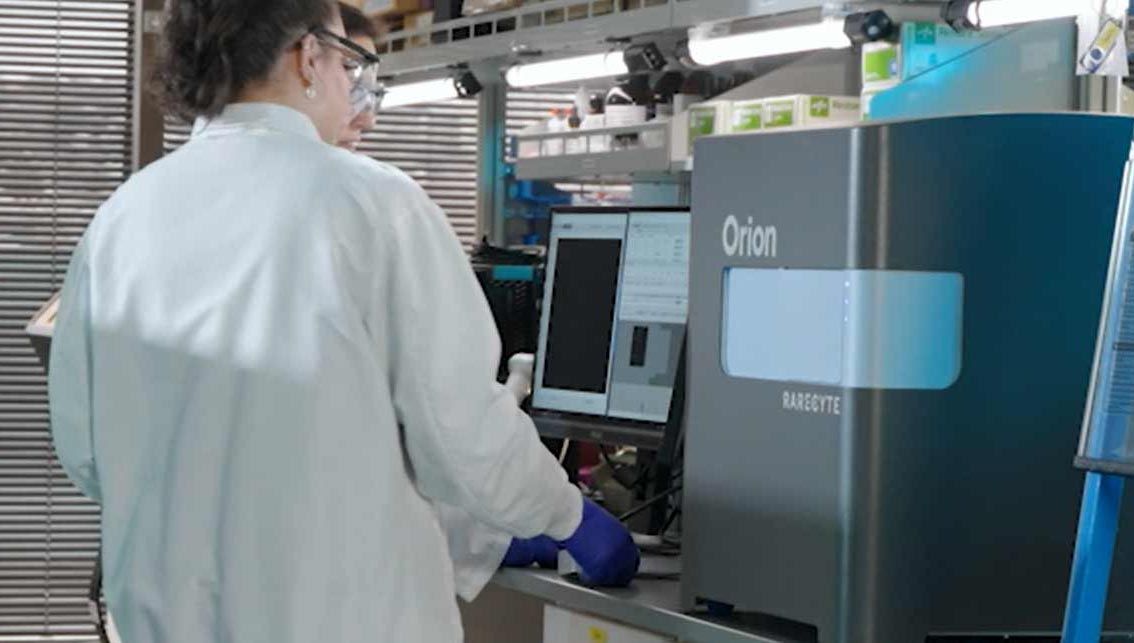
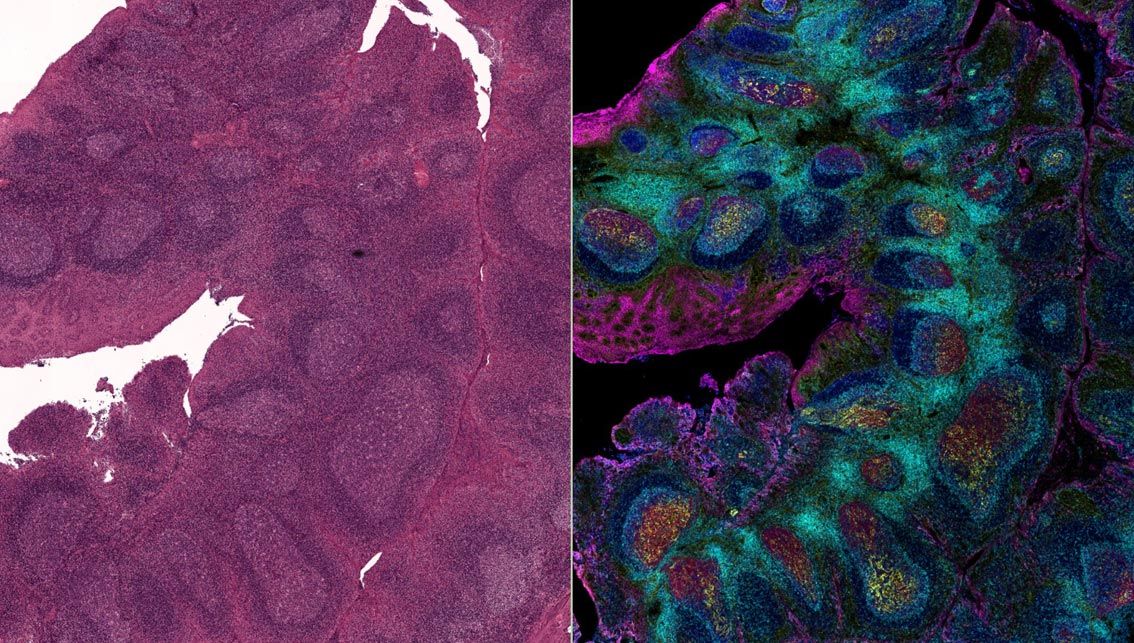
So I also have the opportunity to look behind the scenes. This is the assembly in action of Orion machine. So it is really a small kind of small footprint machine and this is all peeled back. But a disclaimer here is that the machine we got is fully dressed and fully behaved. You’re right, it has been a workhorse for us for the past, we got it last summer, I think past a little bit over a year. So we have built more than 20 panels, more than two dozen panels with some of the examples highlight here, colorectal cancer that you’ve shown earlier as well. Multiple myeloma from the bone marrow and hepatocellular liver tissues, non-small cell lung cancer as well as small cell lung cancer of the neuroendocrine origin. Ovarian cancers as well. So this is what I mentioned a bit more because this is more close to heart for immunologist, this is tertiary lymphoid structure that we found in one of the lung cancers. And this is really a kind of disorganized cluster of immune cells together. It’s going to mimic a lymph node, but it’s not really a fully function lymph node, but it’s been found that the presence of TLS or tertiary drugs, it can somehow used as a prognostic indicator for immune checkpoint therapies. So that is pretty interesting for us. So to your early questions, many times TLS is one things look for in our sections.
Tad George (RareCyte): Yeah, great. We did get another question from the audience. It’s probably for both of us. So it’s basically structured around testing with the Orion, nice. You’ve shown lots of panels there. This question’s more like any plans or attempts to transition to CLIA for clinical testing, right?
Zhihong “Z” Chen (OCCAM Immune): That’s a great question.
Tad George (RareCyte): Yeah, so maybe you can start off there. I can also talk about probably more of a, yeah,
Zhihong “Z” Chen (OCCAM Immune): Yeah, I start off to say Tad, how about a consideration of CLIA certification? Okay, so I remember this question I asked when I was visiting, I saw you have CLIA certified equipment, but it’s not, it’s different. So I think that that’s a question we have all along and that’s I think a dream that it can come true.
Tad George (RareCyte): So definitely we do have other assays that are CLIA compatible in the liquid biopsy spaces. And I do think the system’s very amenable to LDT because the main thing I would say, even the liquid biopsy stuff, we have CLIA test in our lab for that. I would say that what’s really favorable in terms of administering this technology in the clinical setting is kind of on the reagent side. We didn’t talk a lot about that, but the reagents are anytime you want reproducible results and reliable outcome, which is pretty much what CLIA is demanding, that you can rely on the result and you can get it over and over again. The big part of it is the instrumentation, but for these it is mostly the reagents. And we thought a lot about that in terms of the approach we took to the reagents that are used on the Orion system. And as you know, these are antibodies directly conjugated to small molecule, organic.
Zhihong “Z” Chen (OCCAM Immune): Here we go, I have slide for you Tad.
Tad George (RareCyte): Excellent. Right. And you’re probably ahead, right? Validation on single channel versus IHC, et cetera. And the more complex the reagents are, and this actually led into certain attributes of the instrument because usually what you’re doing with traditional microscopy is if you’re trying to reliably identify low abundance biomarkers, you’re going to need amplification.
Okay. If you have amplification, you have more complex reagents that might need to go on auto stainers and then the burden for reproducibility becomes higher just because the complexity of stain even one biomarker. Now I think the question gets at, of course in the clinical setting, people are interested in five plus, 10 plex. How can they do this all in a reproducible manner? So certainly with direct conjugates it’s very easy to validate those reagents. We also have five-year shelf life. So many of the pharma partners are working with us on multi-year studies. It’s all in a single lot. So there’s no lot bridges. The staining is super reproducible because it’s a simple master mix. It’s applied in batches. So the staining is done when we were doing trials. We typically are imaging stuff from weeks ago while we’re building samples that are coming in over time. And once we get to 20 or 24 samples, we’ll stain them all in one batch, right. It’s a master mix, simple two hour stain. So all of these attributes are very amenable to CLIA requirements.
Zhihong “Z” Chen (OCCAM Immune): But how about the equipment side?
Tad George (RareCyte): Equipment side, we do manufacture other devices under ISO and that is something that we certainly are thinking heavily about with the Orion. So yeah, I think if there’s any follow up question to what I’ve said there in the audience, please ask it. And we do have, like you are doing an ARO, we’ve sold into CROs already. We haven’t done any ring trials like say three or four site trials. We’ve certainly got internal data running with multiple operators on multiple instruments, the same assay getting the same result. But yeah, I think there’s definitely a pathway to CLIA, certainly LDT with Orion.
Zhihong “Z” Chen (OCCAM Immune): For sure. Okay, right. That’s great. Good to hear.
So good segue on the reagent side. So as a list here, there’s a lot of off the shelf antibodies that are already available. And if you are coming with a panel that has come from those, then you come in for a treat. So we can start your project right away. We can even probably finish your project within weeks depending on the size of the study. But as I said earlier, for the 20 panels that were built, there’s none of them really come without any requirement for customization. So some examples here, they want to look at the TREM2 expression macrophages or plasma cells in macro myeloma tissues with 138 or the brain tight junctions in brain vasculature that we built up from ground that I mentioned earlier, or even cancer markers that is unique to certain cancer types. So we can all customize to build a panel to suit to your study.
So some examples I put together here, the first one is a collaboration that we did with Dr. Dolores Hambardzumyan. Dr. Hambardzumyan is a scientific director of the brain tumor center at UPenn, and she’s really a world leading scientists in this space in brain tumors, particularly as it related to the brain immune microenvironment, brain tumor immune microenvironment. So she came to us to ask for build panel. So I just listed some of these kind of markers on the top on macrophages, CD4, CD T cells, and along with some other markers, more of the standard markers, which I don’t have space to show, but she also asked how about this oligodendrocytes or tumor markers that would be adding as well and as well as exercise GFAP or ALDH. So we can all add all that. And one unique marker that she asked is Marker A. So because the data’s not published, I can only use a pseudonym here.
So we asked why focus on Marker A, I think this one of the questions coming from the discovery phase. What they did is they used this preclinical genetic modified mouse model, look at the brain tumors. And for those who don’t look at single cell data on a daily basis, what this splatter shows here is the cluster of cells and they are grouped together by their transcriptome profiles. So when you look at the ostracize right here in this corner, you know that they are highly expressing GFAP or ALDH markers, which we can confirm and validate with our Orion panel. And they also found that in the ostracize in the publishing, they also have see the Marker A. What they found in that study is that Marker A is quite highly correlated to the patient’s cognitive functions, neuro functions and the overall wellbeing. So the question is whether this Marker A can be used somehow reflect the differences in different subtypes of brain tumors. So we’re working on it and the manuscript is almost ready. So keep eye out for the publication coming up pretty soon.
A second example I have is the collaboration we had with the biotech company. So for most tumor target therapies is not surprising that cancer cells themselves are the target. But unique to this study is that this company actually not looking to directly queue the tumor cells, but cell type in the microenvironment, which are considered to be the tumor accomplice. So this is the panel we built for them and these all the cell types that we can identify from this panel. So this is a phase one B trial, even though that’s the primary outcome is not about efficacy, but we can already see these cell types that, unique cell types can reduced commonly compared to baseline when get the samples or tissue samples from on-therapy patients.
So one last example I have before I conclude is a collaboration we have with our very own Dr. Dmitri Zamarin here at Mount Sinai. And Dmitri is also a leading world leading expert in gynecological oncology. And we know that immune checkpoint inhibition I see been used extensively in the past years, really achieve unbelievable efficacies in certain tumors, but not all, and particularly in this ovarian cancer. So they found some patients responded well, but not all. And so in this retrospective study, because the outcome is already known, so they stratified the patients into responders and non-responders and we did run them. So altogether is 40, 40ish subjects. It’s pretty extensive study. Now what they found is that the outcomes really not correlate with how many cells, how many T cells, how many macrophages there, what is important is really their relative location. So really come back to your question, what are they looking at? And probably this is unexpected, but really come to that, this type of assay, this type of results really come only provided by Orion or spatial analysis.
Tad George (RareCyte): I got another question related to that, back to the analysis, again, as you know, these are beautiful images, but sort of converting them into numbers, quantifiable results important. So how do you work with your clients to get what they need? I know that a lot of times we have people ask us to, and there’s another question actually coming about a panel design, which I’ll ask in a second. A lot of times people, they’ll pick a panel, they’ll submit samples, they get run, you get these beautiful images and then they start asking questions about the analysis. Do you find that, how do you work with your customers to, do you usually know exactly what to ask or do you have to guide them the same way? A lot of times they’re like, yeah, do the quantitative, and you’re like, right, right. I think you have a strategy to guide people or how do you interact with people to get the results that are useful to them?
Zhihong “Z” Chen (OCCAM Immune): Right. Yeah, that’s a great question. I think this is relatively, that’s relatively new to anybody, to everybody. So there is really no set template that we can follow. But our process, regular process is that we would discuss upfront for panel construction already. So it’s more focused panel design. From there, once the image is generated, we’ll run our standard pipeline. So all that, so you just
Tad George (RareCyte): To stop you there, meaning at the time of panel design, you’re already talking about the analysis output, right?
Zhihong “Z” Chen (OCCAM Immune): Yeah, yeah. You will have some idea. So actually throughout this process, we work closely with our clients. There’s many iterations back and forth. We provide some data and then they look at datae cause most times they are the domain expert of certain diseases and we provide more of data. So it’s more of objective data and then what’s the data says what the data leads you to, and they then come back to modify their data questions, hypothesis. So I think through the iterations, many of them then will reach a conclusion, can reach interpretation of the data.
Tad George (RareCyte): Right. Okay, great. Yeah, I’m getting, so I think we’re coming to a close. And yeah, go ahead and conclude then.
Zhihong “Z” Chen (OCCAM Immune): Sure. Yeah, I was just want to quickly conclude. We established OCCAM and we are very excited about this platform, so we want to share the excitement with the bigger community. So come talk to us if you’re ready to run your samples.
Tad George (RareCyte): Yeah, absolutely. Yeah, definitely contact OCCAM, contact us with any questions you have about the technology. We can also, so this concludes the webinar, but just to let you know if there are any other questions we can stay on and discuss once, any other questions in the next few minutes. But yeah, other than that, yeah, great seeing you again, Z.
Zhihong “Z” Chen (OCCAM Immune): Of course.
Tad George (RareCyte): Super exciting to see what you’re doing there with our technology and yeah, thanks everyone.
Zhihong “Z” Chen (OCCAM Immune): Thank you so much for having me.
For more information, please contact us at info@rarecyte.com.
Transcript reproduced from the recorded webinar and lightly edited only for speaker labels, obvious transcription artifacts, and the accuracy of proper names; the speakers’ words are otherwise verbatim. Statements of affiliation, quantities, and study details are reproduced as spoken by the participants and may differ from formally published values.